
Key takeaways
- CFA training connects supply-chain theory with day-to-day warehouse, inventory, documentation and dispatch operations.
- Practical exposure to ERP, WMS, stock movement and compliance can improve readiness for entry-level logistics roles.
- Successful C&F operations depend on inventory accuracy, standard processes, trained teams, technology and proactive communication.
Introduction
What is CFA training?
Once a product leaves the manufacturing unit, it still needs to be stored, controlled, documented, shipped and delivered to retailers or distributors. This is where a CFA (Carrying & Forwarding Agent) plays an important role.
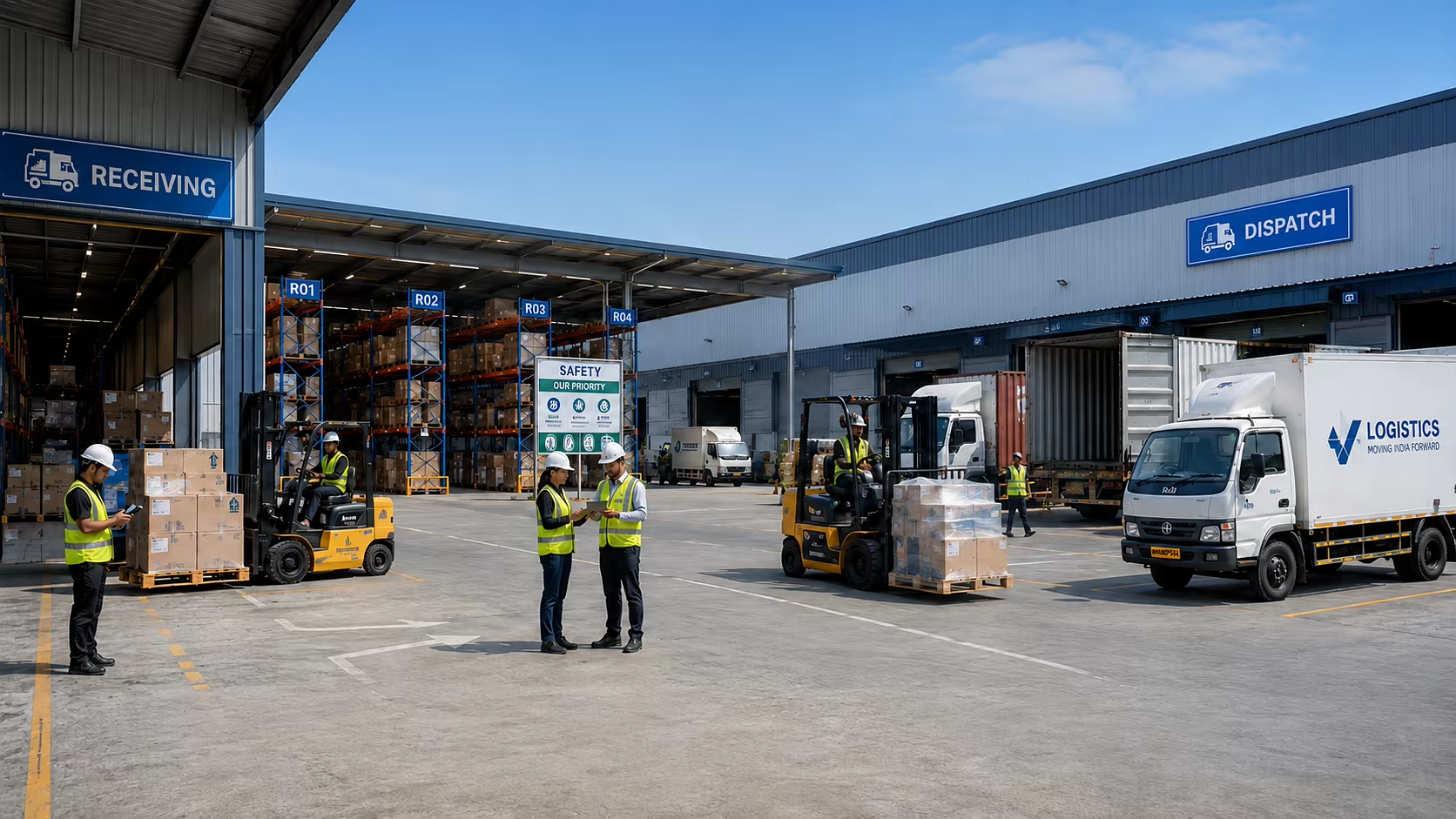
CFA training prepares professionals to understand carrying and forwarding operations, including warehousing, inventory control, order processing, documentation and compliance. C&F operations are particularly important in industries such as pharmaceuticals, FMCG, food and beverages, electronics and consumer goods.
A trained C&F professional does much more than move boxes. They help manage inventory, reduce dispatch delays and coordinate with distributors. For anyone planning a career in logistics, warehousing, supply chain management or distribution, practical CFA training has direct career relevance.
Career relevance
Why is CFA training important for a career in logistics?
Skills you learn through CFA training
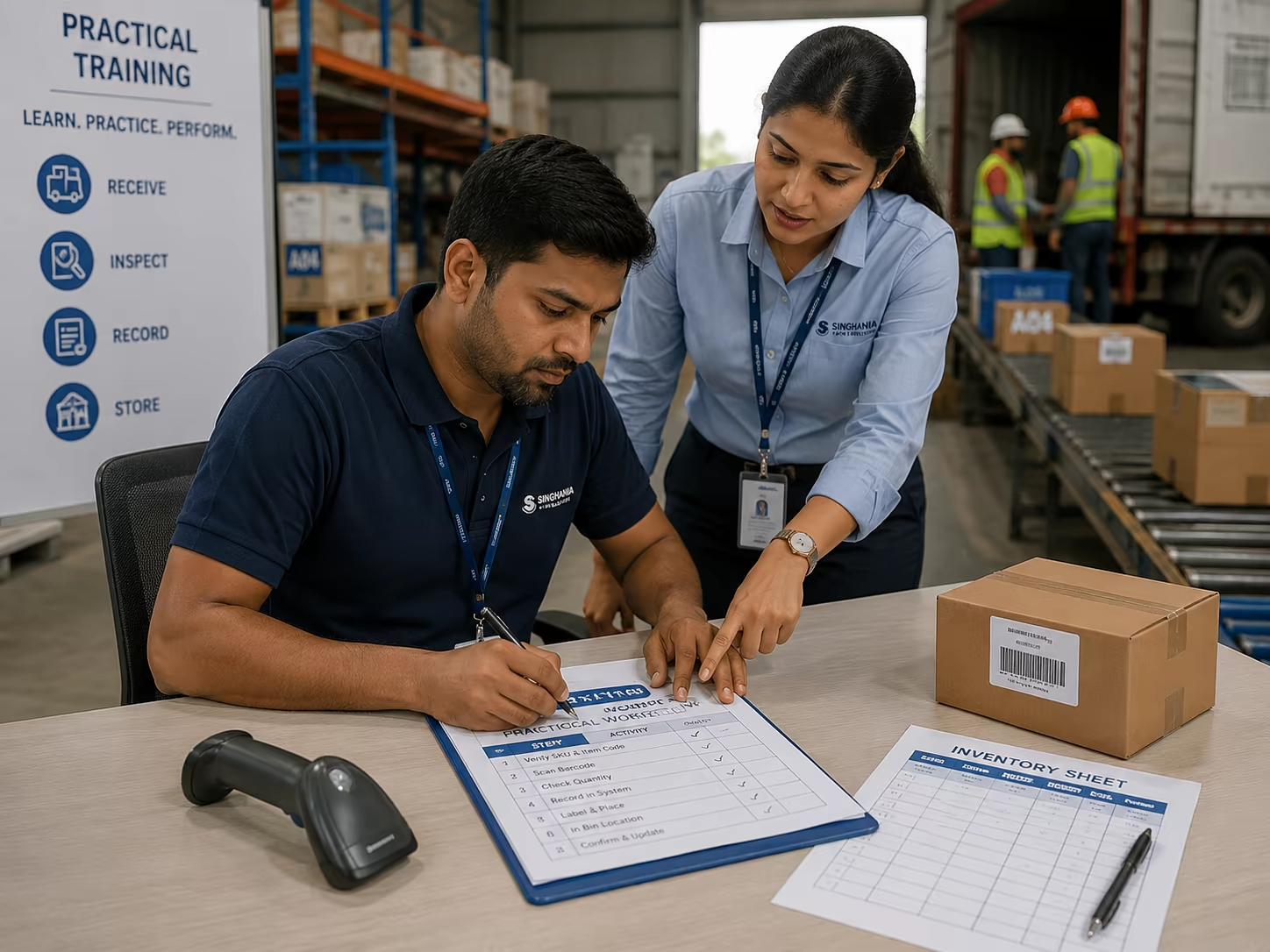
Accuracy is critical in logistics. A small inventory error can lead to a stockout, delayed order, incorrect dispatch or financial reconciliation problem. Practical CFA training helps learners understand the controls used to prevent and resolve these issues.
- 01
Warehouse operations
Learn how goods are received, stored, picked, packed and dispatched efficiently.
- 02
Inventory management
Build familiarity with stock reconciliation, cycle counting, SKU management, batch tracking and stock ageing.
- 03
Distribution management
Understand how CFA operations connect manufacturers with the downstream distribution network and support smooth product movement.
- 04
Documentation and compliance
Learn the role of invoicing, e-way bills, GST-related documentation, MIS reporting and other commercial records.
- 05
Technology
Understand the growing importance of Warehouse Management Systems (WMS), Enterprise Resource Planning (ERP), barcode scanning and digital inventory records.
These skills can support opportunities in warehousing, distribution, supply chain, inventory control and logistics operations.
Step-by-step career path
How to start a career as a Carrying & Forwarding Agent
A successful C&F professional usually needs a combination of education, practical knowledge and industry experience. The following sequence provides a useful starting point.
- 01
Understand the supply chain
Learn how products move through the network and where the CFA fits into the process. The exact structure can differ by company and industry.
- 02
Learn warehouse management
Build a foundation in warehouse operations and stock-handling controls.
- Goods receiving
- Put-away
- Picking and packing
- Stock transfer
- Dispatch planning
- Inventory reconciliation
- Returns management
- Damaged and expired stock handling
- FIFO and FEFO
- 03
Develop documentation skills
Become comfortable with operational paperwork and digital records such as invoices, delivery notes, stock statements, e-way bills, dispatch records, returns documentation and MIS reports. Accuracy is more important than speed.
- 04
Learn ERP and WMS systems
Understand how stock is entered, moved, allocated, picked and reconciled in a digital system.
- 05
Gain practical experience
Combine classroom knowledge with actual warehouse exposure and problem-solving experience.
- Warehouse Executive
- Inventory Executive
- Dispatch Executive
- Logistics Coordinator
- C&F Operations Executive
- Warehouse Supervisor
- Supply Chain Executive
Typical supply-chain flow
FEFO means First Expiry, First Out. It is especially important for products with a limited shelf life, including many pharmaceutical and food products.
Practical advantages
Benefits of CFA training for professionals and businesses
The biggest advantage of CFA training is that it connects logistics theory with day-to-day operations.
- Better understanding of warehouse operations
- Improved inventory management skills
- Knowledge of distribution processes
- Greater familiarity with logistics documentation
- Better ERP and WMS awareness
- Improved job readiness
- A foundation for supervisory and management roles
For businesses, CFA-trained personnel can contribute to better stock accuracy, faster order processing, fewer operational errors and stronger coordination. In multi-region operations, a regional CFA can serve as the operational link between the manufacturer and the local distribution network.
Real-world operations
Common challenges in C&F Agent operations
Real-world problems and practical solutions
CFA operations may appear simple from the outside, but warehouse and distribution teams manage operational issues every day.
Inventory mismatch
Physical stock may not match system records.
Practical response: Perform regular cycle counts, investigate discrepancies promptly and enforce disciplined stock-movement procedures.
Dispatch delays
Orders may be delayed by picking errors, documentation errors, vehicle availability or last-minute changes.
Practical response: Use clear dispatch cut-off times, picking checklists and systematic order prioritisation.
Damaged or expired inventory
Damage and expiry can be especially costly in pharmaceutical, food and other sensitive sectors.
Practical response: Use appropriate storage conditions and inventory-rotation methods such as FIFO and FEFO.
Poor communication
A CFA coordinates with manufacturers, distributors, transporters and internal teams.
Practical response: Establish defined reporting formats, escalation procedures and regular operational reviews.
Technology gaps
Manual processes can make large inventories difficult to control.
Practical response: Introduce barcode-based tracking, ERP integration, WMS tools and automated reporting where practical.
Industry trends
CFA industry trends: technology, compliance and smarter warehousing
How C&F operations are changing
The CFA business is moving beyond traditional godown management. Modern operations increasingly combine physical warehousing with digital inventory control, data reporting and technology-enabled fulfilment.
- 01
Digital inventory management
Serial-number management, barcode systems, SKU-level tracking and integrated software improve visibility. Electronics operations, for example, may require serial- or IMEI-level tracking.
- 02
E-commerce fulfilment
CFA facilities can support modern trade, marketplaces, direct-to-consumer channels and faster order cycles in addition to traditional distributor networks.
- 03
Cold-chain logistics
Temperature-sensitive pharmaceuticals, dairy products, frozen foods and other perishables require specialised storage, handling and monitoring.
- 04
Data-driven decision-making
Inventory reports and operational dashboards help identify slow-moving stock, dispatch bottlenecks, stock discrepancies and service-level problems.
Future CFA professionals will need both practical logistics knowledge and digital skills.
Operational discipline
Best practices for successful CFA operations
Building a reliable C&F operation
- 01
Keep inventory accurate
Never treat stock reconciliation as a formality. Accurate inventory is the foundation of reliable distribution.
- 02
Create standard operating procedures
Every major activity, from receiving inventory to shipping orders, should follow a defined process.
- 03
Train warehouse teams continuously
Inventory personnel need ongoing knowledge of safety, documentation, product handling, technology and quality requirements.
- 04
Use technology appropriately
Technology should simplify work and improve transparency rather than add unnecessary complexity.
- 05
Monitor key performance indicators
Useful KPIs include order accuracy, inventory accuracy, dispatch speed, damages, returns and warehouse utilisation.
- 06
Communicate proactively
Do not allow an operational issue to become a customer-service problem. Early communication helps teams manage shortages, delays and damages effectively.
Common questions
Frequently asked questions about CFA training
What is CFA training?
CFA training covers the practical aspects of carrying and forwarding operations, including warehousing, inventory, order processing, dispatch, documentation, distribution and supply chain management.
What does CFA stand for in logistics?
In the Indian logistics and distribution sector, CFA usually stands for Carrying & Forwarding Agent. It may also be written as C&F Agent or C&FA.
Is CFA training useful for freshers?
Yes. It can give graduates practical exposure to warehouse and distribution operations and help them prepare for entry-level logistics and supply-chain roles.
Which industries use C&F agents?
C&F models are used in industries such as pharmaceuticals, FMCG, food and beverages, electronics, consumer goods and many other distribution-led sectors.
What skills are required to become a C&F professional?
Useful skills include inventory management, warehouse operations, documentation, communication, basic commercial understanding, ERP and WMS familiarity, problem-solving and team coordination.
Is a C&F agent the same as a distributor?
Not usually. A C&F agent generally stores and forwards goods on behalf of a brand, while a distributor commonly purchases or takes commercial possession of goods and sells them within a market. The exact arrangement depends on the business.
Can CFA training lead to a supply-chain career?
Yes. CFA knowledge can provide a foundation for careers in warehouse management, inventory management, logistics coordination, distribution and wider supply-chain operations.
Conclusion
Build practical expertise for a long-term logistics career
A career in logistics is not only about transporting goods from one point to another. It is about delivering the right product to the right recipient, at the right time and in the right condition.
CFA training can benefit anyone who wants to work in carrying and forwarding operations. The strongest learning approach combines structured training with hands-on experience in warehouse management, inventory systems, documentation, ERP and WMS tools, and real operational problem-solving.
For professionals, these skills can support progression from entry-level warehouse roles to supervisory and management positions in distribution and supply chain. For businesses, well-trained CFA personnel can become an important part of a reliable distribution network.
Continue learning
Explore CFA Operations & Management
Build structured operational understanding through guided modules, practical activities, assessments and instructor support.