Key takeaways
- In logistics, CFA stands for Carrying & Forwarding Agent, not Chartered Financial Analyst.
- A CFA acts as an operational connection between manufacturers and downstream distributors or retailers by receiving, storing and forwarding goods.
- CFA responsibilities include stock receiving, warehousing, order processing, dispatch coordination, documentation, compliance and reporting.
- Technology, faster delivery expectations, GST-era compliance and consolidation are changing modern CFA operations.
Introduction
What is the CFA full form in logistics?
When you search for "CFA full form", you will find a lot of information online regarding CFA (Chartered Financial Analyst) and its exam dates, salaries and careers in the financial industry. But if you actually want information regarding the logistics and supply chain industry, this search generates no results for you.
In the logistics and supply chain context, CFA refers to Carrying and Forwarding Agent. CFA is one of the commonly used terms in the logistics and supply chain ecosystem in India and is used for professionals or firms involved in receiving, storing and forwarding products.
This article explains the meaning of CFA in logistics, how a Carrying & Forwarding Agent fits into the supply chain, its key responsibilities, challenges, industry trends and career opportunities.
Key concepts and fundamentals
What Is the CFA Full Form in Logistics?
In logistics, CFA refers to Carrying & Forwarding Agent. A CFA is either an individual or a firm that is appointed by manufacturers or brands, mainly in FMCG, pharmaceuticals or consumer products, for the procurement, storage and distribution of their products in a particular area or state.
A CFA can therefore act as a connection point between the manufacturing unit of a company and the final selling point of its products. Brands may appoint local CFAs instead of setting up their own warehouse operations across every state or region.
The term frequently appears in logistics job advertisements, distribution tenders and supply-chain programs. It can also create confusion with CFA, the abbreviation used for Chartered Financial Analyst, even though the two refer to completely different fields.
Supply chain role
Understanding the Role of a Carrying & Forwarding Agent
How a CFA fits into the Indian supply chain
Imagine a food processing company that produces its products in one factory located in Gujarat and sells throughout the country. Delivering every individual order directly from one manufacturing site can be cumbersome and can increase distribution costs.
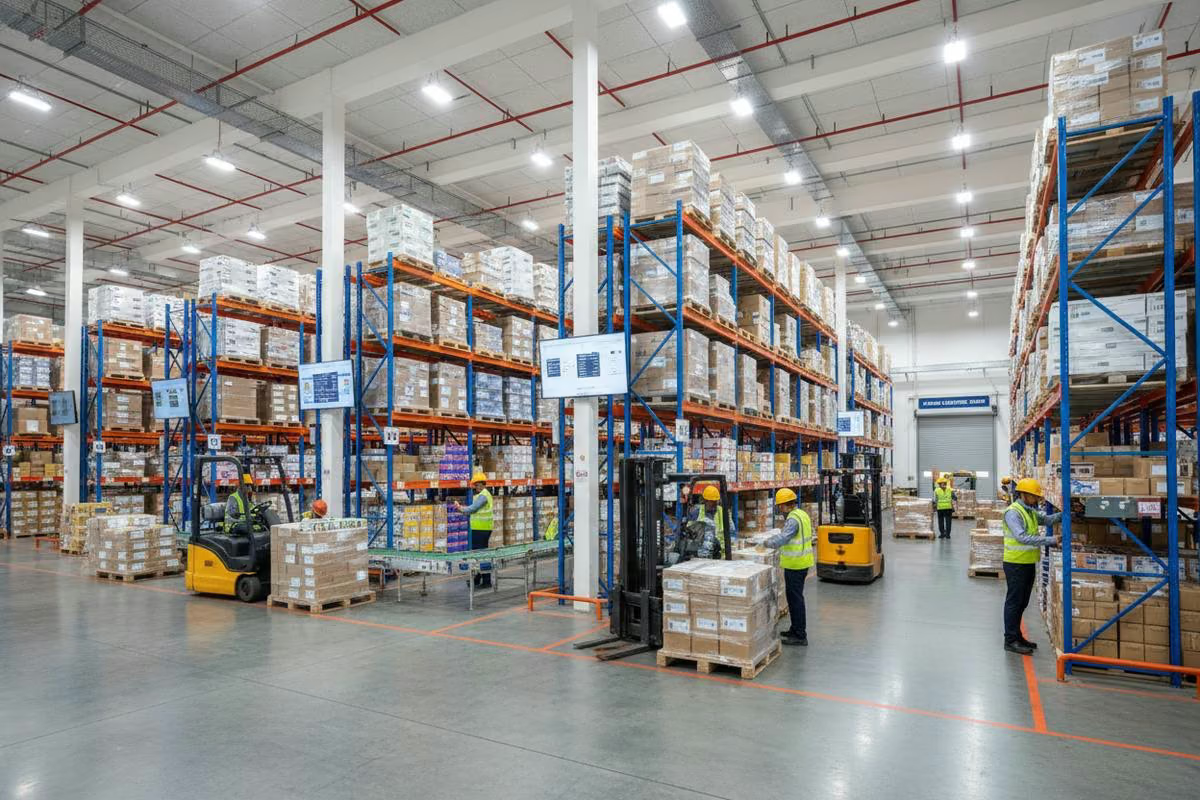
To address this, the company may appoint CFAs in major states or regions. The CFA maintains a warehouse, receives bulk deliveries from the factory and divides them into smaller batches that can be dispatched to distributors and retailers in the region.
This structure is used across sectors such as FMCG, pharmaceuticals, consumer electronics and parts of the automotive supply chain. In pharmaceuticals, temperature-sensitive products and batch tracking can make warehouse handling and compliance particularly important.
Typical supply-chain flow
Terminology
CFA vs C&F Agent — Are They the Same Thing?
Clearing up the terminology confusion
Yes. In regular business environments, "CFA" and "C&F Agent" generally mean the same thing. "C&F" is short for "Carrying & Forwarding", while "CFA" incorporates the word "Agent".
The terminology can vary by context. "C&F Agent" may appear in legal documents or contracts, while "CFA" is often used more loosely in everyday business conversations. Both terms refer to the same general function of receiving products, storing them and forwarding them.
Core responsibilities
Key Responsibilities of a CFA in Logistics Operations
Step-by-step: what a CFA actually does
The responsibilities of a CFA include much more than simply keeping products in a warehouse. A CFA typically manages several operational activities that support the movement of goods through a defined territory.
- 01
Receiving stock
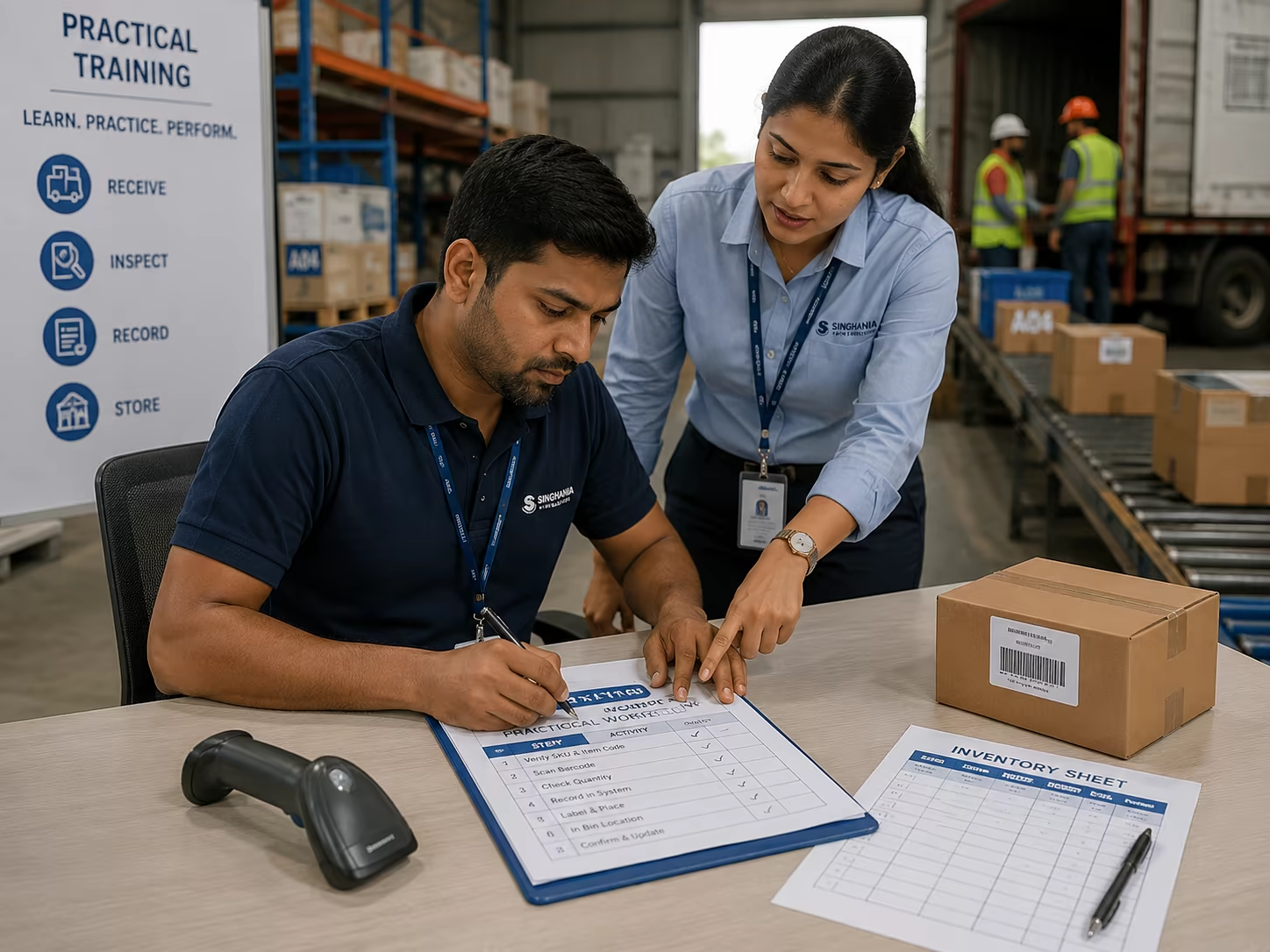
Receive goods from a producing facility and compare quantities with invoices and relevant records.
- 02
Warehousing
Store products appropriately while tracking batch codes and expiration dates whenever relevant, particularly in pharma and FMCG.
- 03
Order processing
Obtain orders from wholesalers or retailers and arrange deliveries according to the required schedule.
- 04
Dispatch and transport coordination
Plan dispatches and coordinate transportation, usually with regional carriers and other logistics partners.
- 05
Documentation and compliance
Maintain necessary documents such as delivery challans, GST-related records and stock registers.
- 06
Reporting
Keep the principal company regularly informed about stock, sales and relevant operational information.
Care is required at every stage. A wrong dispatch, expired stock or documentation mistake can create problems later in the distribution process.
Practical benefits
Why Understanding CFA Meaning in Logistics Matters
Benefits for businesses and career seekers
For companies, working with the right C&F agent can support statewide distribution without requiring the company to establish its own warehousing chain in every location. A capable CFA can support delivery speed, compliance and local distribution coordination.
For individuals, C&F activities provide career opportunities within logistics and supply chain operations. Warehouse managers, C&F professionals and logistics managers can benefit from understanding how these distribution networks operate.
- Understanding warehouse and distribution operations
- Knowledge of inventory handling and stock control
- Familiarity with logistics documentation and compliance
- Awareness of regional distribution processes
- Foundation for warehouse, logistics and supply-chain roles
- Understanding of how manufacturers coordinate with downstream partners
CFA work can also involve an entrepreneurship dimension because a CFA may operate a regional warehousing and distribution business under an agreement with a larger company.
Industry trends
Industry Trends Shaping CFA Operations Today
What's changing in carrying and forwarding
CFA operations are evolving as compliance requirements, customer expectations and warehouse technology change. Several shifts are influencing how carrying and forwarding activities are managed.
- 01
GST-era compliance
Invoicing and documentation have become more standardised, while businesses need to pay attention to GST-related processes and inter-state movement requirements.
- 02
Faster delivery expectations
Rapid-commerce and changing customer expectations require CFAs to process and dispatch orders faster than traditional distribution models.
- 03
Warehouse technology
Inventory management software, barcode scanners and simple automation are becoming increasingly normal parts of warehouse operations.
- 04
Consolidation
Some major FMCG players are choosing to work with fewer and larger CFAs in particular areas, increasing operational expectations for selected partners.
The core CFA function remains the same, but professionals working in this area need to continuously adapt their skills to changing operational requirements.
Real-world operations
Common Challenges Faced by CFA Agents
Overcoming common obstacles in C&F operations
CFA warehouse operations can appear straightforward from the outside, but teams regularly deal with inventory, capacity, coordination and compliance issues.
Inventory mismatches
Minor differences can occur between recorded stock and the physical stock available in the warehouse, particularly during busy periods.
Practical response: Use structured stock-control procedures, regular reconciliation and timely investigation of variances.
Seasonal demand spikes
Festive or promotional periods can increase order volumes and put pressure on warehouse capacity and staffing.
Practical response: Plan capacity and staffing in advance and prepare processes for higher-than-normal order volumes.
Coordination with the principal company
Delays in receiving stock, pricing changes or promotional information from the manufacturer can create operational bottlenecks.
Practical response: Maintain defined communication channels, reporting routines and escalation procedures.
Compliance overhead
GST-related processes, delivery paperwork and stock records require regular and accurate management.
Practical response: Maintain organised documentation, standard procedures and trained staff responsible for compliance-related tasks.
Structured processes and trained staff can help CFAs manage these requirements more consistently than relying on informal processes developed over time.
Common questions
Frequently asked questions about CFA training
What is the full form of CFA in logistics?
CFA stands for Carrying & Forwarding Agent. In logistics, it generally refers to a business or individual appointed by a producer or brand to receive goods, store them and distribute or forward them within a specified area.
Is CFA in logistics related to Chartered Financial Analyst?
No. Chartered Financial Analyst is a finance qualification, while CFA in logistics refers to Carrying & Forwarding Agent. The two concepts share the same abbreviation but have different meanings.
What does a Carrying & Forwarding Agent do?
A CFA typically receives goods from a producer, stores them, processes orders and forwards products to dealers, distributors or retailers in a specified territory along with the required documentation.
What is the difference between a CFA and a distributor?
A CFA generally works for a manufacturer or principal to receive, store and forward goods, while a distributor commonly purchases goods and resells them in a market. The exact commercial arrangement can vary by business.
How do I become a C&F agent in India?
A C&F operation generally requires suitable warehouse space, working capital, an agency agreement with a manufacturer or principal, applicable GST registration and systems for managing orders and inventory. Exact requirements depend on the business arrangement.
What skills are needed for a career in CFA operations?
Useful skills include inventory management, basic accounting, knowledge of GST-related processes, warehouse operations, documentation, communication and coordination.
Is CFA a good career option in India?
CFA operations are part of the distribution processes used in sectors such as FMCG and pharmaceuticals. People interested in logistics and supply-chain management can explore roles connected with warehousing, C&F operations and distribution.
Conclusion
Understanding CFA is the first step toward understanding C&F operations
If you are searching for the full form of CFA in logistics, CFA stands for Carrying and Forwarding Agent. A CFA helps move goods from manufacturers through regional warehousing and distribution networks toward dealers, distributors and retailers.
Whether you are an entrepreneur exploring a distribution network or a job seeker considering a career in logistics, understanding the CFA's duties, challenges and changing role can provide useful practical knowledge.
For learners who want hands-on knowledge of carrying and forwarding operations, a Carrying & Forwarding Agent (CFA) course can cover areas such as warehousing, inventory, documentation, compliance and delivery operations.
Continue learning
Explore CFA Operations & Management
Build structured operational understanding through guided modules, practical activities, assessments and instructor support.