Key takeaways
- A CFA course covers the complete operational flow from receiving goods and controlling inventory to preparing documentation and dispatching orders.
- Effective training combines warehouse processes, technology, compliance and practical exposure rather than relying on theory alone.
- The skills developed can support entry-level opportunities across CFA, warehouse, inventory, dispatch and logistics operations.
Introduction
CFA training goes beyond storing goods
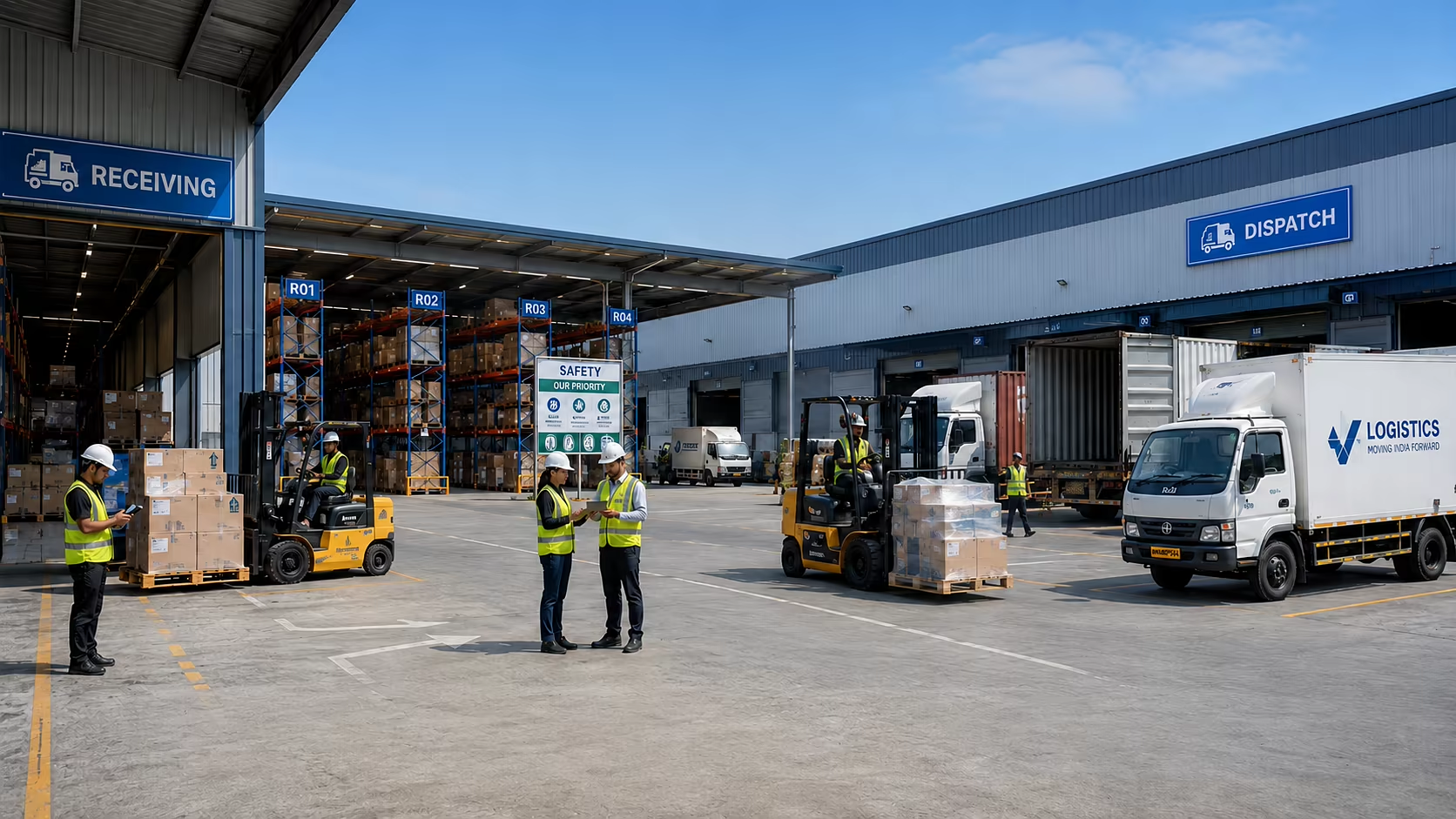
The process of carrying and forwarding goes beyond merely storing goods in a warehouse. It includes receiving goods, managing inventory and documents, following standard operating procedures, and dispatching products accurately and on time.
This is why a carrying and forwarding training course combines knowledge with practical training. Instead of learning logistics only through textbooks, learners can understand how logistics processes work within business operations.
For students, graduates and working professionals who want to enter the logistics industry, CFA training can provide a useful foundation for opportunities in warehousing, distribution and logistics operations.
Course purpose
What does a CFA training course teach?
A CFA course is designed to explain how carrying and forwarding activities are managed from the receipt of goods through final dispatch. It generally covers warehouse activities, inventory management, logistics documentation, CFA operations, compliance and the use of technology.
The objective is straightforward: help learners understand how goods flow through a CFA operation and develop the knowledge required to perform logistics tasks responsibly.
Typical supply-chain flow
Core curriculum
Important areas covered in CFA training
- 01
Warehouse operations
Learn how goods are received, checked, stored and prepared for dispatch, and how the warehouse supports the wider supply chain.
- Receiving and inward processes
- Storage and racking
- Picking and packing
- Dispatch procedures
- Standard Operating Procedures (SOPs)
- Basic warehouse safety
- Material movement
- 02
Inventory management
Understand practical stock-control concepts such as inventory records, accounting, verification, audits and reporting. Accurate information is essential because differences between physical stock and system data can disrupt operations.
- 03
Logistics documentation
Learn the purpose and operational importance of documents such as invoices and e-way bills. Correct documentation supports transparency, traceability and fewer operational mistakes.
- 04
The complete CFA operational cycle
Understand receiving, stock maintenance, order coordination, shipment preparation and dispatch, along with the way different departments work together to move products.
- 05
Import and export basics
Where included in the curriculum, import and export fundamentals help learners understand how logistics connects with trade, distribution and product movement across geographical locations.
- 06
Technology, safety and compliance
Modern logistics combines physical operations with digital systems, reporting and process controls.
- Digital inventory management
- Reporting processes
- Warehouse Management Systems (WMS)
- Barcode processes
- Safety precautions
- Compliance requirements
Job-relevant capabilities
Skills developed through a CFA training programme
CFA training helps learners develop a combination of technical understanding and practical workplace skills.
- 01
Warehouse management
Understand the process of receiving, storing and dispatching products.
- 02
Inventory management
Keep records current and support stock verification and reporting.
- 03
Documentation
Handle operational documents and understand why accurate records matter.
- 04
Coordination
Work with teams across warehouse and distribution operations.
- 05
Problem-solving
Identify operational issues and respond with appropriate solutions.
- 06
Reporting
Record and communicate relevant operational information clearly.
- 07
Compliance
Follow applicable processes, safety requirements and standard operating procedures.
Learning methodology
Why practical exposure matters in CFA training
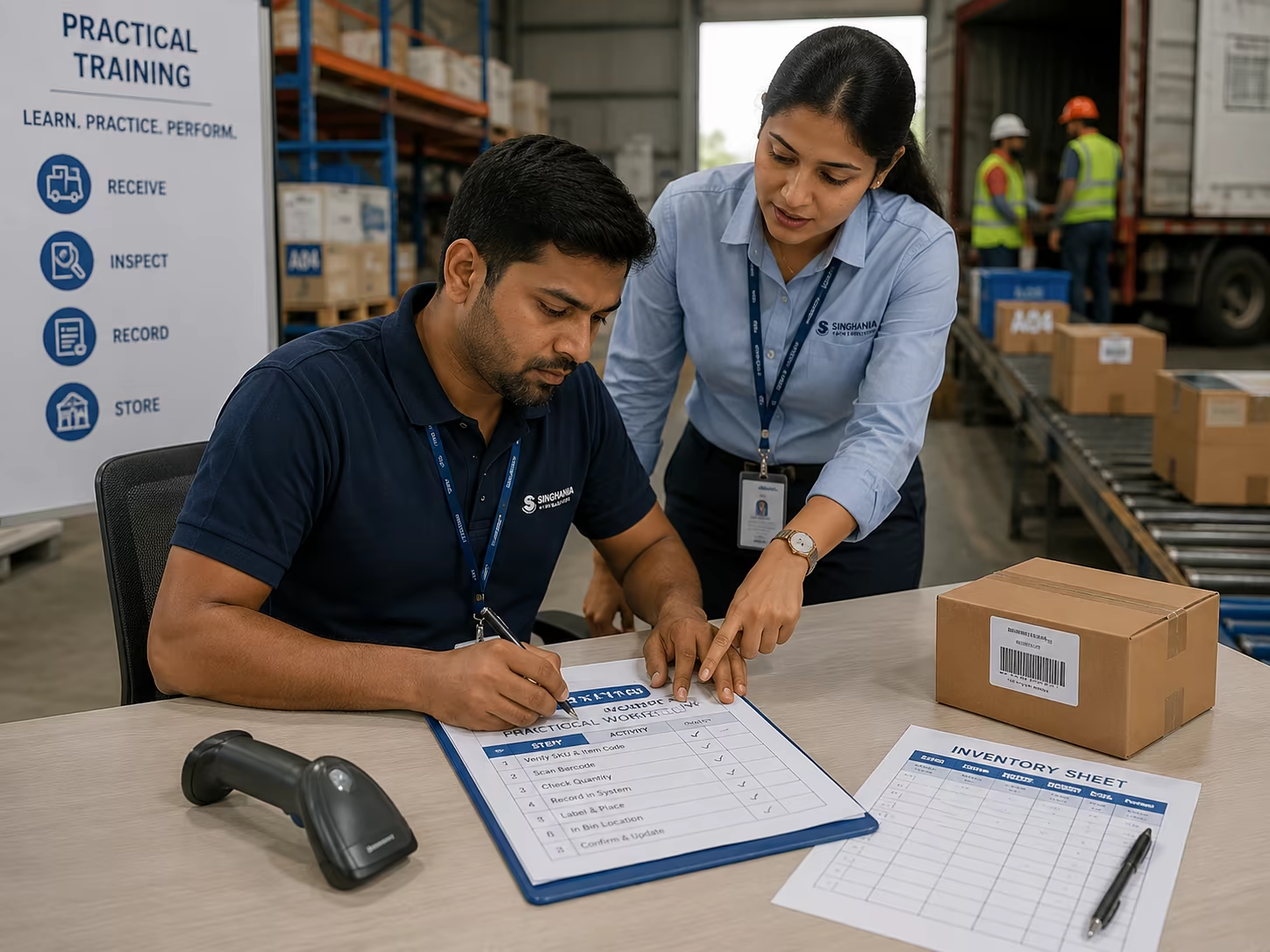
Practical exposure is one of the most valuable parts of effective CFA training. Singhania Institute's training methodology is built around practical logistics and warehousing, with exposure to receiving, storage, inventory, documentation, picking, packing and dispatch processes in an active warehouse context.
This approach makes it easier to connect theoretical concepts with practical situations. Inventory control becomes clearer when learners understand stock recording and reporting, while documentation becomes easier to understand when it is linked with the physical movement of goods.
Career pathways
Career opportunities after a CFA course
A CFA course can support exploration of different roles across logistics, warehousing and distribution. Final opportunities depend on the learner's qualifications, skills and experience, as well as employer requirements.
- CFA Executive
- Warehouse Executive
- Warehouse Coordinator
- Inventory Executive
- Logistics Executive
- Dispatch Coordinator
- Warehouse Supervisor
- Operations Executive
- Logistics Coordinator
The operational knowledge covered by a CFA course may also be useful for individuals interested in understanding or managing a carrying and forwarding business.
Eligibility and audience
Who should consider a CFA training course?
- Students looking to enter logistics
- Graduates seeking practical career skills
- Working professionals planning to move into logistics operations
- People interested in warehouse management
- Individuals exploring carrying and forwarding business opportunities
- Professionals seeking practical exposure to CFA operations
Extensive prior logistics experience is not required to begin learning the fundamentals. A structured course can introduce the operational process from the beginning.
Operational understanding
Why carrying and forwarding training is important
The logistics industry depends on people who carry out operational tasks accurately. Definitions are useful, but knowledge becomes practical only when learners understand receiving, inventory control, document handling, storage and dispatch.
Carrying and forwarding training helps learners understand how warehouse functions connect and how operational decisions affect the movement of goods. Singhania Institute combines instructor-led and recorded classes, quizzes, practical activities, and career assistance such as resume preparation and mock interviews.
Common questions
Frequently asked questions about CFA training
What topics are usually covered in CFA training?
CFA training commonly covers logistics documentation, inventory control, warehouse operations, carrying and forwarding processes, dispatch, import and export fundamentals, and technology used in logistics operations.
Is CFA training suitable for students and graduates?
Yes. Students, graduates and people planning to enter logistics can consider CFA training to build foundational knowledge and practical exposure to carrying and forwarding operations.
What skills can I gain through a CFA course?
Learners can develop skills in warehousing, inventory management, documentation, coordination, reporting, dispatch procedures, compliance and general logistics operations.
What career roles can I explore after CFA training?
Depending on qualifications, skills, experience and employer requirements, learners may explore roles such as CFA Executive, Warehouse Executive, Inventory Executive, Logistics Executive, Dispatch Coordinator and Warehouse Supervisor.
Is practical training important for CFA operations?
Yes. Practical training helps learners understand how receiving, inventory, documentation, storage and dispatch processes operate in real warehouse and CFA environments.
Conclusion
Start with practical knowledge of CFA operations
People planning a logistics career should remember that practical knowledge can be as valuable as theoretical understanding. The right training can help develop the skills and operational awareness required in the workplace.
For anyone interested in carrying and forwarding, warehousing or logistics operations, a CFA training programme can provide a structured starting point for building practical knowledge and exploring relevant career pathways.
Continue learning
Explore CFA Operations & Management
Build structured operational understanding through guided modules, practical activities, assessments and instructor support.