
Key takeaways
- CFA training specialises in carrying and forwarding, warehousing, inventory, dispatch and distribution operations.
- Logistics training offers broader exposure to transportation, freight, procurement, supply chain and related functions.
- Neither option is automatically better; the right choice depends on the learner's career goal.
- Combining specialised CFA knowledge with broader logistics understanding can support long-term career growth.
Career Choice
CFA training or logistics training: where should you begin?
The field of logistics is no longer confined to transportation and delivery of goods. In today's world, the success of a business depends on efficient warehousing, inventory control, distribution, order fulfilment and logistics processes that move products from the manufacturer to the customer.
Many career options have emerged from this growth, including CFA training and logistics training. What is the difference between these choices? What is CFA in logistics? Should you opt for specialised CFA training or broader logistics training?
CFA Fundamentals
What is CFA in logistics?
CFA is the abbreviation for Carrying and Forwarding Agent within the logistics and distribution industry.
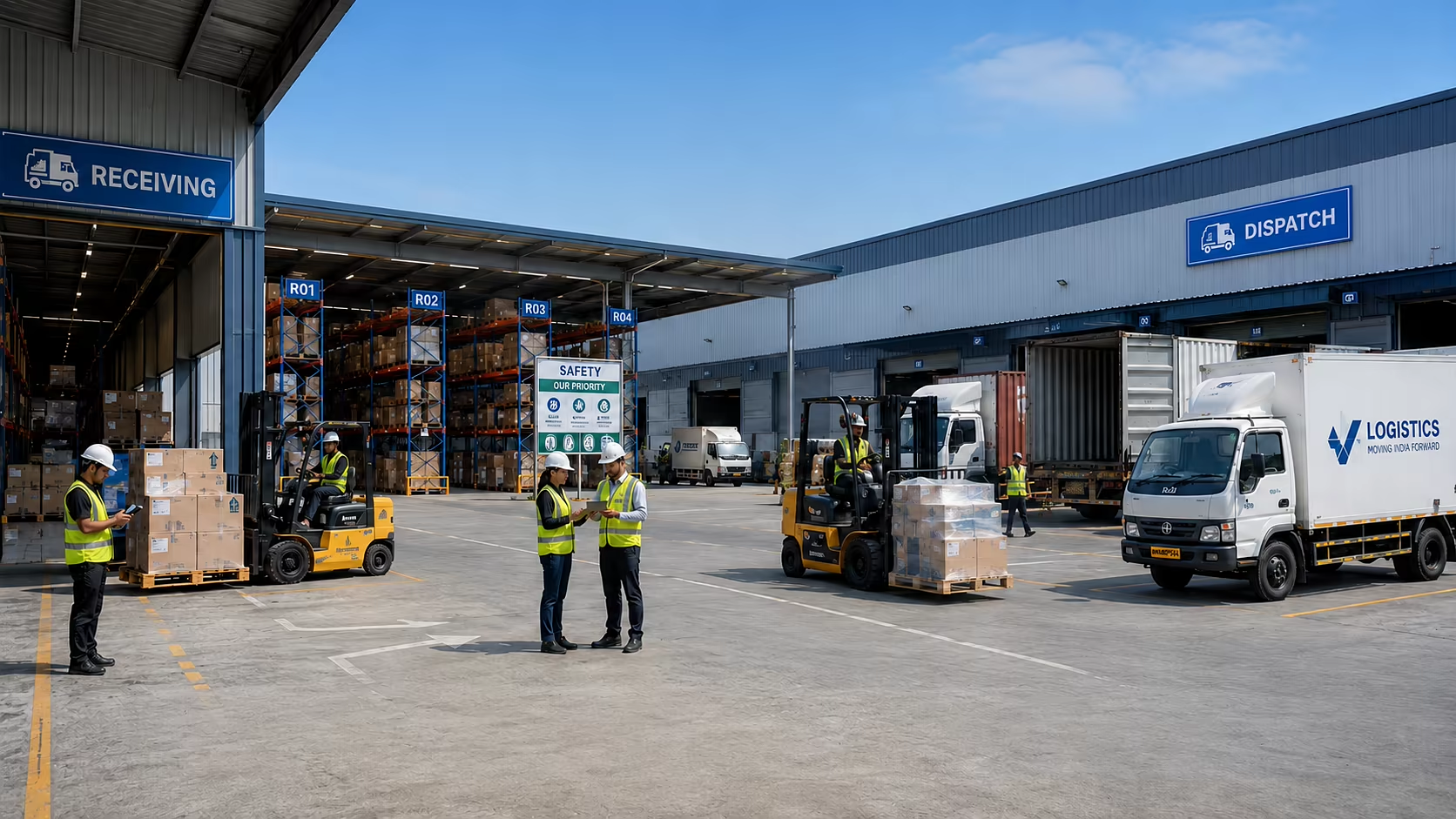
A CFA acts as an operational intermediary between a manufacturer or business organisation and its distribution channels. Depending on the business structure, the CFA may receive goods, keep inventory, maintain stock control, process orders and deliver goods to distributors.
That is why the terms CFA logistics, CFA warehouse, CFA agent and carrying and forwarding agent are commonly used in connection with distribution activities.
Typical supply-chain flow
The structure may vary by company and industry, but the main purpose of the CFA is usually to keep products organised and moving efficiently within the distribution process.
Daily Operations
What does a CFA agent do?
A CFA agent may handle several day-to-day operational activities, including:
- Receiving goods from the manufacturer
- Storing and organising inventory
- Maintaining stock records
- Managing inward and outward movement
- Processing orders
- Picking and packing products
- Coordinating dispatches
- Working with distributors and transporters
- Maintaining operational documentation
- Supporting inventory control
A CFA storage centre is therefore more than a storage unit. It is an active distribution centre where goods are handled and distributed according to the firm's requirements.
Broader Industry View
What does logistics training cover?
Logistics training offers a wider perspective on the flow of goods, information and operational processes. Compared with CFA training, which focuses more specifically on carrying, forwarding, warehousing, inventory and distribution, logistics training may include:
- Warehouse management
- Transportation management
- Inventory management
- Distribution management
- Supply-chain fundamentals
- Freight operations
- Procurement basics
- Order fulfilment
- Import and export processes
- Logistics documentation
- Technology used in logistics
This broader approach may be useful if you want to consider different career options across logistics and supply-chain management.
Specialisation vs Breadth
The key difference between CFA and logistics training
The simplest way to understand the difference is specialisation versus broader exposure. Neither course is automatically better; the answer depends on what you plan to do after training.
CFA training is an appropriate choice if you are specifically interested in warehousing, inventory, distribution, dispatch, carrying and forwarding operations.
For example, a pharmaceutical company's CFA warehouse may receive goods, maintain inventory, process distributor orders, arrange dispatches and coordinate with transportation teams. CFA training is relevant for someone who wants to understand these operations.
Specialised Path
Who should choose CFA training?
CFA training can be especially useful for:
- Students interested in distribution operations
- Fresh graduates looking for operational roles
- Warehouse executives
- Inventory professionals
- Distribution executives
- Logistics professionals
- People interested in becoming a CFA agent
- Individuals exploring a carrying and forwarding opportunity
Broader Path
Who should choose logistics training?
Logistics training may be a better fit if you want general industry knowledge without specialising immediately. You may begin in warehousing and later move into transportation, cargo, inventory control, distribution or supply-chain management. A logistics curriculum helps explain how these processes fit together.
- Students starting a logistics career
- Graduates interested in supply chain
- Warehouse professionals
- Transport and dispatch executives
- Inventory professionals
- Operations executives
- Professionals planning to move into management
Operational Backbone
Why warehouse knowledge matters in CFA logistics
Warehouse operations are the backbone of many CFA activities. A modern warehouse needs reliable processes for receiving, storing, identifying, picking, packing, shipping and accounting for inventory.
If 5,000 units are received by a CFA warehouse, the team must answer several practical questions:
- How much stock was received?
- Where should it be stored?
- What is currently available?
- Which orders need to be processed?
- Which products should be dispatched?
- What documentation is required?
- How should stock movement be recorded?
Even a small inventory or dispatch error can affect the entire logistics network. This is why practical knowledge of CFA warehouse logistics can be a strong advantage for people entering the profession.
Industry Application
What does CFA mean in the pharmaceutical sector?
In pharmaceutical distribution, CFA also stands for Carrying and Forwarding Agent. Medicine distribution may have additional operational requirements related to batches, expiry dates, storage conditions and stock management.
The CFA can therefore become an important part of maintaining product movement between a pharmaceutical company and its distribution channel. Anyone interested in pharmaceutical logistics can benefit from understanding both CFA and wider logistics operations.
Product Movement
How a CFA connects the distribution channel
A Carrying and Forwarding Agent within a distribution channel links the producer's supply chain with downstream distribution activities. The CFA may handle inventory before goods are delivered to distributors or stockists, and efficient coordination helps keep products available.
This is why CFA distribution centre, CFA distributor, CFA warehouse and carrying and forwarding are closely related concepts. Understanding this structure helps learners see how products move through the market before reaching retailers.
Connected Knowledge
Can CFA and logistics training be combined?
Yes. Both can be integrated to provide a stronger understanding of the industry. Think of CFA training as specialised operational knowledge and logistics training as broader industry knowledge.
A person with knowledge of both can connect warehousing with transportation, inventory, distribution and supply-chain management. This wider context becomes increasingly relevant as a professional takes on greater responsibility.
Decision Guide
How to choose the right training for your career goal
Your decision should be based on your career goal.
- 01
Choose CFA training if you want to
- Work in CFA operations
- Build expertise in warehouse management
- Understand carrying and forwarding activities
- Work in distribution operations
- Develop practical inventory and dispatch knowledge
- 02
Choose logistics training if you want to
- Explore broader logistics careers
- Learn about supply-chain management
- Understand transportation and freight
- Work across multiple logistics functions
- Build a foundation for future management roles
If you are unsure, review the actual syllabus instead of selecting a programme only by its title. A strong programme should balance theory and practice and use industry-related examples to explain logistics processes.
Career Direction
Career prospects after CFA or logistics training
Career prospects exist across warehousing, distribution, transportation, inventory and supply-chain management. Choosing suitable training can help you develop skills connected with the type of role you want to pursue.
Learners interested specifically in CFA logistics can build knowledge of Carrying and Forwarding Agent responsibilities, CFA warehouses, inventory management and distribution channels. Learners seeking wider career flexibility may prefer logistics training because it provides broader supply-chain exposure.
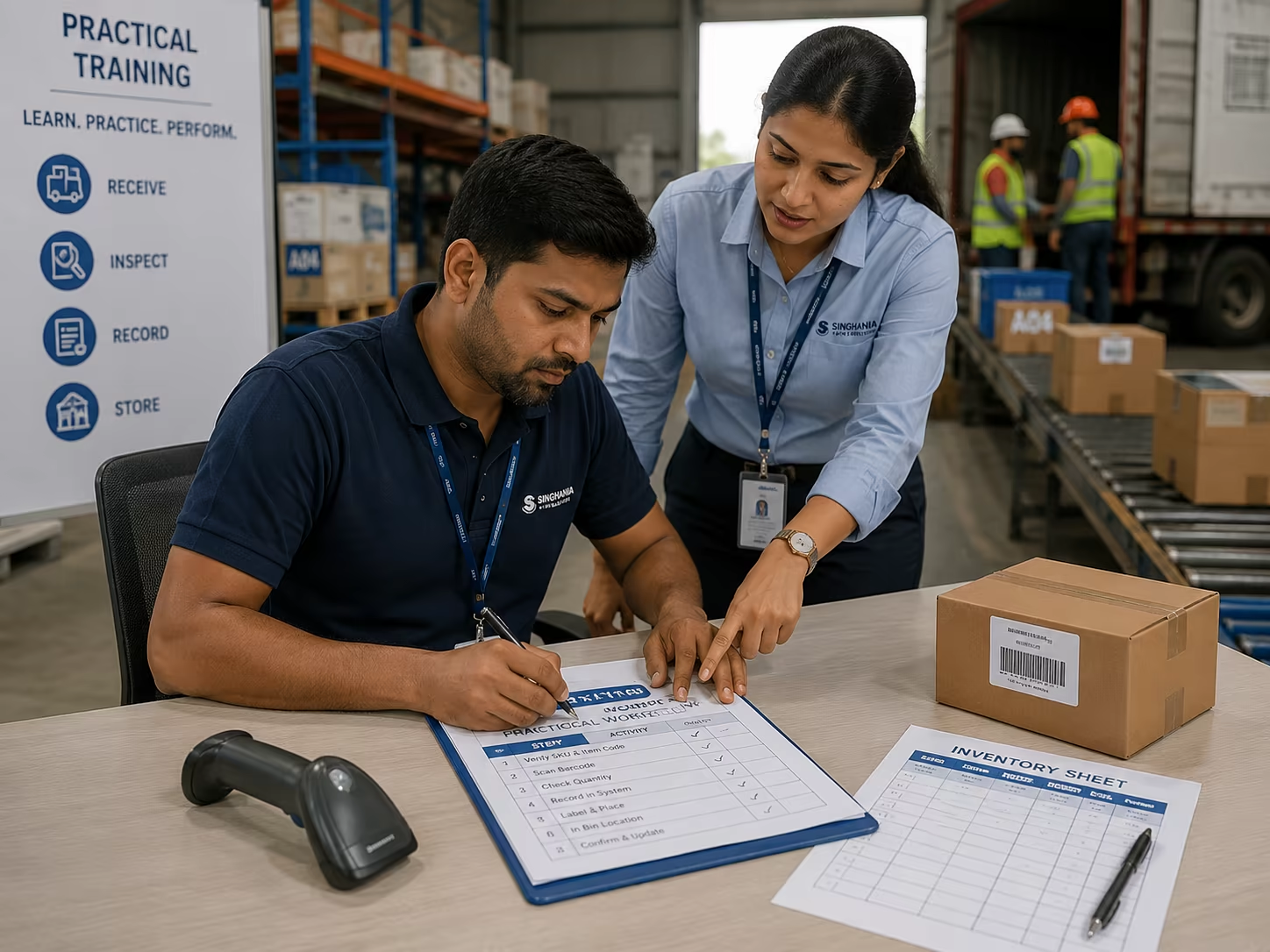
At Singhania Institute, the objective is not only to finish a programme but to help learners understand the industry and develop practical operational knowledge.
Common questions
Frequently asked questions about CFA training
What is CFA in logistics?
CFA stands for Carrying and Forwarding Agent. A CFA helps organisations receive, store, manage and forward products within the distribution process.
What is a CFA warehouse?
A CFA warehouse is a facility where goods are received, stored, managed and forwarded within a firm's distribution process.
What is the meaning of C&F?
C&F stands for Carrying & Forwarding. The terms CFA agent and C&F agent are frequently used when discussing carrying and forwarding operations.
Is CFA training useful for warehouse and distribution careers?
Yes. CFA training can be valuable for people interested in warehouse management, inventory, distribution, dispatch and carrying and forwarding operations.
What is CFA in the pharmaceutical sector?
In pharmaceutical distribution, CFA stands for Carrying and Forwarding Agent. CFA activities can form an important part of a pharmaceutical company's distribution chain.
Which is better: CFA training or logistics training?
There is no one-size-fits-all answer. CFA training specialises in carrying, forwarding, warehousing, inventory and distribution, while logistics training covers a wider range of supply-chain and logistics activities. The right choice depends on your career goal.
Conclusion
Choose the programme that matches your next career step
CFA training and logistics training are not competing choices; they are two different learning paths within the same industry. CFA training develops specialised operational understanding, while logistics training provides broader exposure across the supply chain.
Choose the option that fits your current goal, review the syllabus carefully and continue upgrading your knowledge as your career develops.
Continue learning
Explore CFA Operations & Management
Build structured operational understanding through guided modules, practical activities, assessments and instructor support.