
Key takeaways
- C&F agents manage storage, inventory, documentation and dispatch on behalf of a principal company.
- Company appointment and a C&F agreement define the agency relationship and responsibilities.
- Warehouse facilities, trained staff, systems and financial capacity are key requirements.
- Licensing and compliance requirements depend on the product category and business activity.
- Investment varies by sector, territory and the principal company's requirements.
- Practical training can support careers in C&F, warehousing, logistics and distribution.
Start here
Introduction
If you’re seeking to know how to become a C&F agent, you’re looking at one of the critical connections in India's distribution system. Each unit of biscuits, medicine, or fertilizer packaged in the store goes through a series of warehouses before it arrives there. Many of those warehouses are operated by the C&F agents.
In this article, we cover what the work of C&F agents involves, what is needed to qualify, the steps involved, cost of operations, as well as the skills and career opportunities in the field.
C&F basics
What Is a C&F Agent?
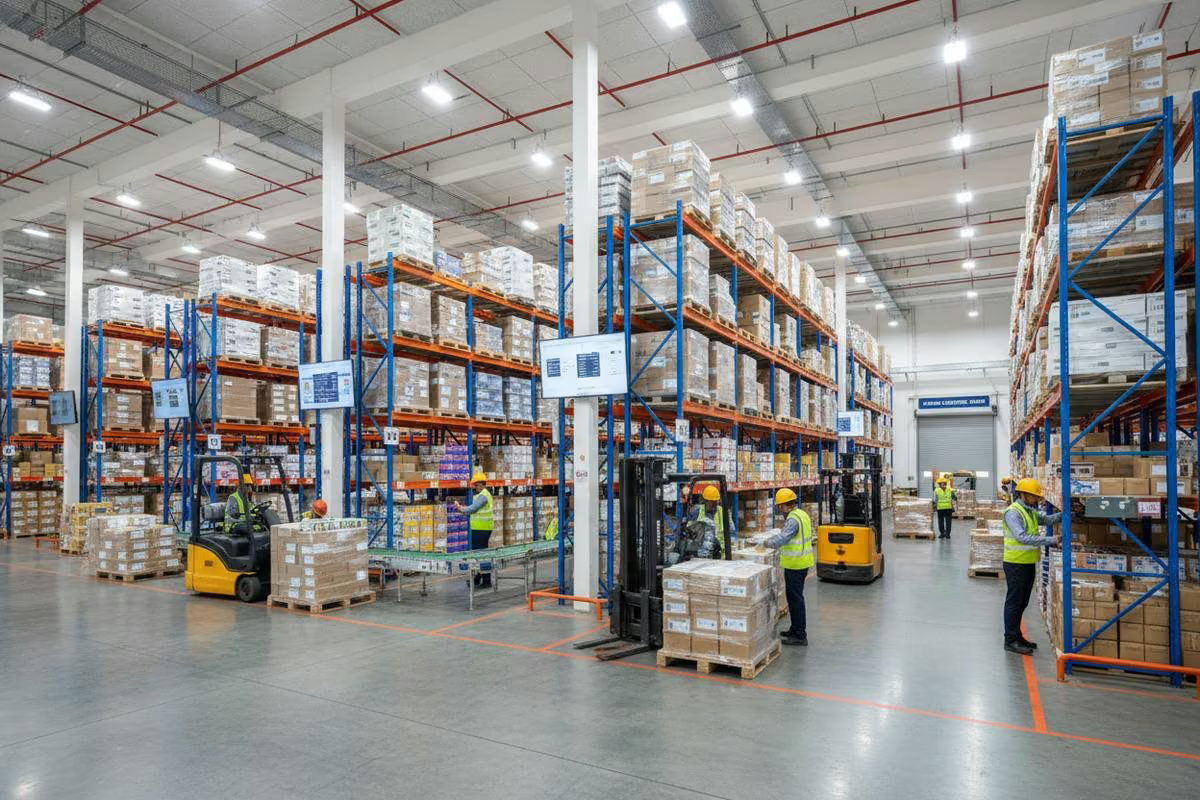
C&F (Carrying and Forwarding) agents are commercial partners chosen by the manufacturer or principal business firm to carry out the C&F functions. The agent collects the products from the point of manufacturing of the company, keeps them in his warehouse, and delivers the goods to the franchisee, dealers, and stockists in a specified region comprising a state or a group of districts.
It is a common practice for the main firm to retain ownership of the products. The C&F agent does not purchase or resell the goods. The agent offers storage, handling and shipping; and receives compensation for it. This is the significant distinction between them and a distributor, which will be later discussed in this document.
The use of C&F agents saves companies the need to invest in and manage warehouses in multiple states. Such agencies can be found in pharmaceutical and FMCG sectors, consumer durables, agricultural inputs, paint and construction materials.
Daily operations
What Does a C&F Agent Do?
The ordinary job of a C&F agent serves as the core of a regional supply chain:
- Receiving items from the factory or the central storehouse of the employer and making sure they match the invoices and challans
- Warehousing and inventory control involves storing goods, controlling batches and expiry dates, and keeping stock records
- Processing orders from the distributors and stockists operating in the territory
- Selecting and packing means being engaged in packing, issuing documents, as well as driving vans of vehicles to deliver the goods
- Reporting to the employer and providing them with stock statements, sales and reconciliation
- Dealing with returns, losses and expires according to the company’s policy
Here, the importance of accuracy cannot be stressed enough. The stock is kept in your warehouse which makes any discrepancy between the physical stock and the stock recorded in the system impact your status.
Getting started
How to Become a C&F Agent in India
Becoming a C&F agent doesn't rely on passing one specific exam or obtaining a government license. Instead, you are appointed by a company, meaning the process involves fulfilling the company's requirements and entering into an agreement. Typically, individuals follow these guidelines:
- 01
Understand the business model
Let’s understand how C&F agents make money, what duties they perform, and what kind of risks they take.
- 02
Choose an industry
Pharma, FMCG, agri-inputs and consumer goods are different from one another in terms of warehousing, licenses and compliance.
- 03
Arrange the basics
The most basic minimum requirement is having a warehouse, registered business entity, GST number and sufficient amount for working capital and security deposit.
- 04
Approach principal companies
Numerous firms request applications for C&F agencies in certain neighbourhoods and this is how most obtain C&F for a corporation through the distribution or logistics team of the company or through answering an advertisement in their territory.
- 05
Go through the company's evaluation
You will need to be prepared for warehouse check-up, investigation of financial position, manpower and systems examination.
- 06
Sign the C&F agreement
Sign the C&F agreement and commence functioning upon confirmation of the territory by the principal and then the conditions and procedure of handover.
Entry requirements
Eligibility and Basic Requirements
Each company sets its own criteria, but these requirements are common:
- A registered business entity: a private limited company, LLP, partnership firm or sole proprietorship
- PAN, GST registration and a current bank account in the business name
- A warehouse or godown that meets the company's criteria in terms of location, size, safety and security norms.
- Trained manpower: the warehouse team, billing and accounts personnel and supervisors
- Computer systems and inventory software compliant with the principal's reporting needs
- Financial capacity to deposit security and run the day-to-day enterprise.
The industry license relevant to pharma companies must be held by a Pharma C&F agent. A valid FSSAI license is an important requisite for the Food Products C&F agent. Hence, check the licenses that apply to your industry category prior to finalizing your warehouse.
Educational qualification is of little significance. Proven prior experience in distribution, logistics, or warehousing would drastically increase your chances, as the principal need an agent who can run their operations smoothly without supervision.
Business agreement
How C&F Agreements Work
C&F agreement is the legal document pertaining to your relationship with the principal company. Although the agreements differ, what they cover usually includes:
- Territory and scope: the territory and merchandise involved in the agreement
- Duration and renewal: the duration of the agreement and how it can be renewed or terminated
- Responsibilities: the receiving, storage, dispatch, reporting, insurance, and the manner of handling loss
- Remuneration: the commission or handling charge, and when it is paid
- Security deposit: the amount you place with the company, and the conditions for its refund
- Stock accountability: who bears losses from shortages, theft, damage or expiry
- Compliance: documentation, audits and statutory obligations
Before signing the agreement, please take time to read the entire agreement paying special attention to the clauses that deal with liability of stocks, termination and refunding of deposits. It is advised to have a lawyer check the agreement as well.
Planning your investment
Investment and Infrastructure Requirements
Since there is no set amount of money required to invest in being a C&F agent, the amount will depend upon the business sector, territory and the principal. The major expenses you would incur in this business are;
- Warehouse: rent or ownership, racking, fire safety, security and, for some categories, temperature or storage controls
- Security deposit to the principal company
- Manpower: salaries for warehouse and office staff
- Systems and equipment: computers, barcode or inventory software, handling equipment
- Working capital: to cover operating costs until your first commission or handling charges arrive
- Insurance: for the premises and, where required, for stock
Ask each principal company for its specific requirements in writing, and build your budget from those numbers.
Understanding the difference
C&F Agent vs Distributor
New entrants often confuse the two roles.
- Stock ownership: C&F Agent: Usually stays with the principal company. Distributor: Buys stock and owns it.
- Core role: C&F Agent: Storage, handling and dispatch. Distributor: Buying and selling to retailers.
- Customers: C&F Agent: Distributors, stockists, dealers. Distributor: Retailers and sub-dealers.
- Earnings: C&F Agent: Commission or handling charges. Distributor: Trading margin on sales.
- Scale: C&F Agent: Regional (state or multi-district). Distributor: Local (town or district).
In a nutshell, the C&F agent provides service to the organization while supplying the dealers, while the dealer purchases the product from the organization to sell to the merchants. A proper comparison can be seen later in this article series.
Career pathways
Career and Business Opportunities
One can establish a C&F agency as a type of business while also acquiring skills that enable other career paths such as:
- Own C&F agency: operating one or more agencies, sometimes carrying out work for different organizations or within diverse regions;
- C&F or warehouse manager: performing duties related to the management of operations of a pre-existing agency;
- Distribution or supply chain executive engagement in C&F coordination at a producer's company;
- Logistics and warehousing roles being employed in third-party logistics companies or large distribution systems.
- Consulting and compliance support for new agencies
Knowledge of C&F operations is important since C&F covers everything from warehousing and inventory management to documentation as per GST regulations and management of various parties.
Practical skills
Skills Required for C&F Operations
Effective work at a C&F agency requires certain skills:
- Inventory management: monitoring inventory, expiration dates, and stock correctness
- Warehouse operations: receiving, storage, selection, wrapping and shipment
- GST and documentation: invoices, e-way bills, paperwork and reconciliation
- Logistics coordination: administration of carriers, deadlines and routing
- Communication and relationships: working with the manufacturer, distributors and carriers
- Basic accounting and reporting: commission calculations, present stock situations and surveys
- Technology: working with inventory tools, spreadsheets and ERP programs
Learning and development
How Training Can Help
There are many people who begin working in C&F through training on the job which can be costly. A stock mismatch or compliance mistake in the first year can lead to significant financial loss. A structured form of training can give the essential knowledge of what C&F operations entail. The training provides knowledge of C&F operations, C&F agreement structures, inventory and documentation, and compliance.
For individuals serious about pursuing this career, Singhania Institute's CFA Operations & Management programme is focused on these practical elements, giving you a clear idea of how a C&F business really works.
Common questions
Frequently asked questions about CFA training
What is CFA in logistics?
CFA is an acronym for Carrying and Forwarding Agent. In logistics, CFA is engaged in works like receiving, safe keeping and inventory management, paperwork, order processing, and dispatching on behalf of a particular company.
What does a Carrying and Forwarding Agent do?
Carrying and Forwarding Agent manages transportation and storage of goods from manufacturers to warehouses, distributors and other partners in the supply chain, performing responsibilities like inventory management and documentation, dispatch of goods, and coordination of distribution work.
Who can join a CFA training course?
CFA training may prove to be beneficial for students, logistics personnel, warehouse workers, newcomers and anyone willing to start a career in logistics and supply chain management.
What is taught in a CFA operations course?
CFA operations programs typically involve the study of warehouse functions, inventory control, logistics paperwork, shipment sequencing, order handling, as well as coordination of supply chain processes and other practical knowledge on C&F operations.
What career opportunities are available after CFA training?
Depending on their qualifications and experience, learners can seek employment as CFA Executive, Logistics Executive, Warehouse Supervisor, Inventory Executive, Dispatch Executive, Distribution Executive and Supply Chain Executive
Is CFA training the same as Chartered Financial Analyst training?
In this instance, CFA refers to a Carrying and Forwarding Agent in logistics and distribution. Thus, it differs from Chartered Financial Analyst qualification in finance.
Conclusion
Conclusion
A Carrying and Forwarding Agent plays an important role in keeping distribution and supply-chain operations organised. From warehouse management and inventory control to documentation and dispatch, CFA operations require practical knowledge of multiple logistics processes.
For individuals looking to enter or develop their career in logistics, a structured CFA training course can provide an understanding of these operational responsibilities and the skills needed to work in C&F, warehouse, distribution and supply-chain environments.
Continue learning
Explore CFA Operations & Management
Build structured operational understanding through guided modules, practical activities, assessments and instructor support.